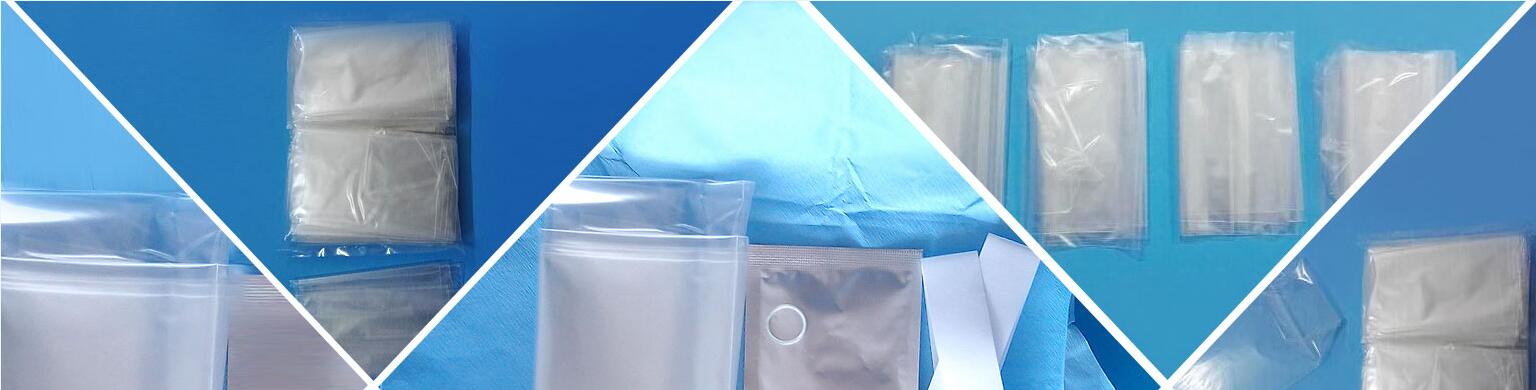
Probe cover selection is a clinical decision with direct implications for patient safety, diagnostic accuracy, and healthcare-associated infection (HAI) prevention. According to the WHO Report on the Burden of Endemic Health Care-Associated Infection Worldwide, HAIs affect hundreds of millions of patients annually, with contaminated medical devices representing a significant transmission vector. Ultrasound probe covers, when properly selected and applied, function as a critical engineering control in the hierarchy of infection prevention.
Design: Individually packaged in sterile barrier system validated per ISO 11607. Sterilized to SAL 10⁻⁶ via EO or gamma irradiation. Full-length design with integrated retention mechanism.
Clinical Use: Mandated for all invasive procedures including: ultrasound-guided peripheral and central venous access, regional anesthesia nerve blocks, fine-needle aspiration and core biopsy, paracentesis, thoracentesis, arthrocentesis, and intraoperative ultrasound. Also required for any procedure crossing mucosal barriers — transvaginal, transrectal, and transesophageal examinations.
Evidence: Multiple outbreak investigations have identified failure to use sterile covers during invasive ultrasound procedures as a root cause. A 2018 multicenter study in Clinical Infectious Diseases demonstrated that sterile cover use during ultrasound-guided procedures reduced procedure-related infection rates from 2.1% to 0.3% (p<0.001).
Design: Bulk-packaged barrier sheaths for high-throughput clinical environments. Available in multiple diameters to accommodate various transducer geometries.
Clinical Use: Routine diagnostic imaging on intact skin — abdominal ultrasound, FAST (Focused Assessment with Sonography in Trauma), vascular access assessment, DVT screening, musculoskeletal diagnostic imaging, thyroid ultrasonography, and breast imaging.
Evidence: When used appropriately on intact skin, non-sterile covers provide effective infection prevention while optimizing resource utilization. A cost-effectiveness analysis in Academic Emergency Medicine found that universal sterile cover use for all ED ultrasound added $47,000 annually per 50,000-visit ED without statistically significant HAI reduction for non-critical applications.
Recommended as the default choice per AAAAI and ACAAI clinical practice parameters. Eliminates Type I hypersensitivity risk. Available in polyurethane (superior elasticity and acoustic properties) and polyethylene (cost-effective for routine applications). All synthetic covers meet ASTM F1671 viral penetration resistance requirements.
Limited role in modern healthcare. May be considered when latex allergy has been definitively excluded by clinical history AND the superior elasticity of latex provides specific clinical benefit. However, most major healthcare systems have transitioned to universal latex-free policies, making latex covers increasingly obsolete in clinical procurement.
A structured probe cover formulary should address the full spectrum of clinical needs: sterile covers for critical/semi-critical procedures, non-sterile covers for routine imaging, latex-free options as the institutional default, endocavity-specific covers for internal examinations, and pediatric sizing for neonatal and infant applications. Linmed Medical provides complete formulary solutions with supporting regulatory documentation, material certifications, and clinical education resources.